News & Updates
From the Stasi Archives to the Palaces of Potsdam: The 46th ILAB Congress and Rare Book Week Berlin 2026 - Part 2 (3)
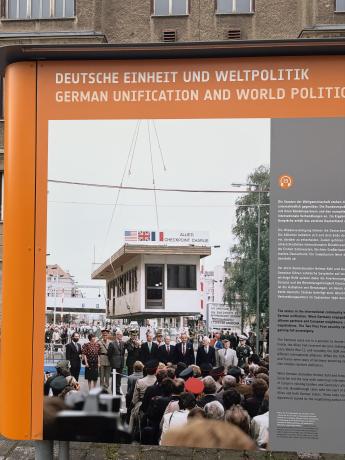
After two days exploring Berlin's literary and cultural heritage, Wednesday's excursion offered a different perspective on the city and its surroundings. It was a day of extraordinary contrasts: from surveillance and political repression in the former German Democratic Republic to the architectural splendour and intellectual ambitions of eighteenth-century Prussia.
The day began in Berlin-Lichtenberg, at the former headquarters of the Ministry for State Security, better known as the "Stasi", an abbreviation for "Staatssicherheit".
For almost four decades, the Stasi operated one of the most extensive surveillance systems in the world, monitoring the lives of East German citizens through an enormous network of employees, informants and secret collaborators.
Today, parts of the former headquarters have been preserved as a museum and archive, providing an extraordinary insight into the workings of the East German dictatorship.
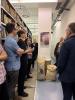
The ILAB delegates were divided into smaller groups for guided visits to the Stasi Museum, the Stasi Records Archive and the outdoor exhibition Revolution and the Fall of the Wall.
The museum, housed in the former offices of Stasi Minister Erich Mielke, offers a particularly striking encounter with this period of German history. Its preserved interiors and historical displays reveal the bureaucratic structures through which the regime exercised control over its population.
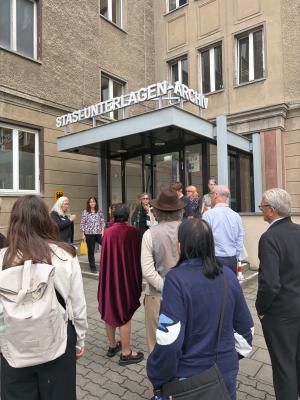
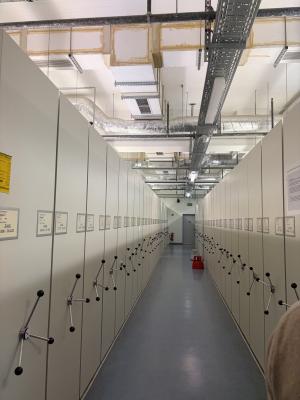
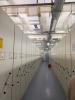
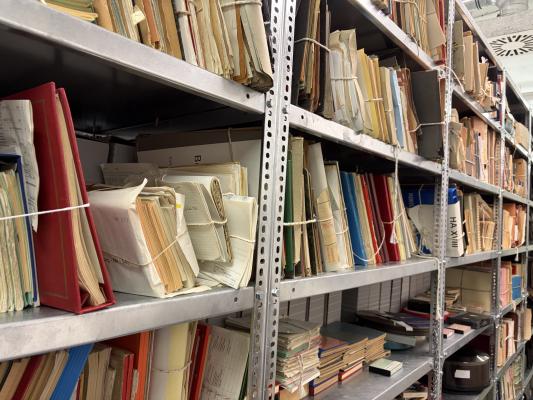
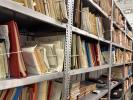
The Stasi left behind an extraordinary quantity of documentation. Millions of pages of records, photographs, files and other materials survive, providing evidence of the surveillance and repression carried out by the former East German state.
Following the peaceful revolution of 1989, citizens played a decisive role in preventing the destruction of these records. Their preservation has since become an important part of Germany's efforts to confront its divided past.
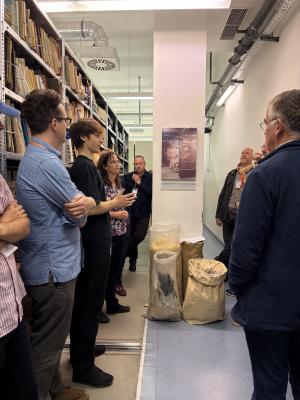
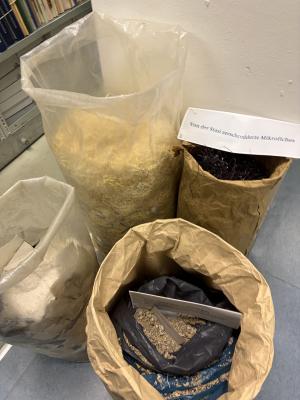
Delegates were shown the usually inaccessible parts of the archive, showcasing complete files but also showcasing the attempted (and in large parts succeeded) destruction of files by the Stasi during the revolution which since have been carefully put together; the work will continue for many years to come.
The importance of the Stasi Records Archive becomes clear when looking at the scale of public interest in its holdings. As delegates learned during the visit, since 1992 the archive has received approximately 3.47 million requests from individuals seeking access to records, alongside 3.48 million requests from public and private institutions, including those conducting background checks on officials.
More than 527,000 requests have concerned rehabilitation, restitution and prosecution, while nearly 43,000 have come from researchers and the media.
These figures illustrate not only the immense scale of the surviving documentation but also its continuing importance for individuals seeking to understand their own histories, for historical research and for Germany's efforts to confront its past.

Leaving Lichtenberg, delegates continued their journey across Berlin towards the western outskirts of the city.
Travelling from the former East Berlin through the reunited city offered an opportunity to observe how profoundly Berlin has changed since the fall of the Wall. The city's architecture, streets and neighbourhoods still reflect the different political and cultural influences that shaped its development over the centuries.
For many international delegates, particularly those visiting Berlin for the first time, the journey provided valuable context for the historical sites encountered throughout the Congress.
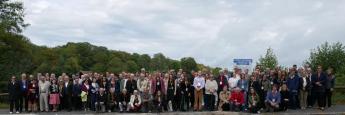
After an intensive morning, the programme continued to the peaceful surroundings of Wannsee, on Berlin's southwestern outskirts. Here, delegates gathered for lunch at the Wirtshaus zur Pfaueninsel, situated beside the landing stage overlooking Peacock Island.
And here comes the customary and always memorable group shot!
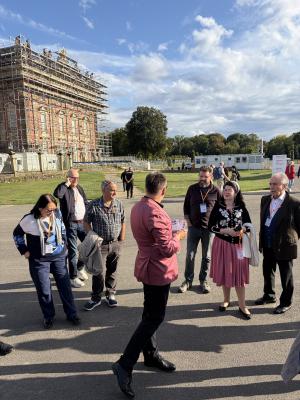
The afternoon took delegates to Potsdam, the former royal residence of the Prussian kings and a city whose magnificent palaces and gardens reflect the cultural and political ambitions of the eighteenth century.
The groups visited two of the most important buildings associated with Frederick II of Prussia, better known as Frederick the Great: the New Palace and Sanssouci.
Frederick the Great was an enthusiastic reader, a musician and a correspondent of leading Enlightenment thinkers, most famously Voltaire, who spent several years at the Prussian court. Books and intellectual exchange played an important role in the king's life, making Sanssouci a particularly appropriate destination for an international gathering of antiquarian booksellers.
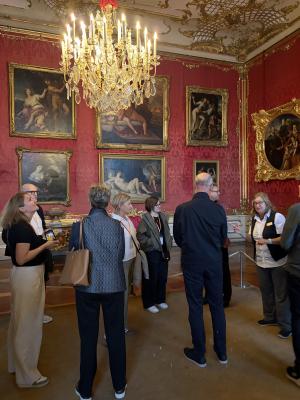
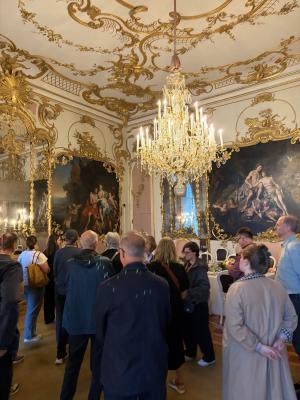
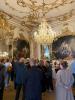
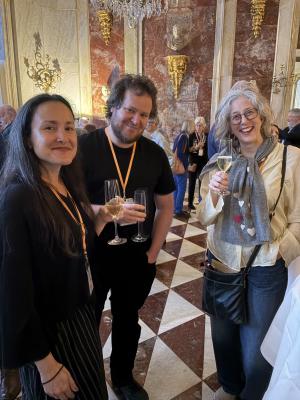
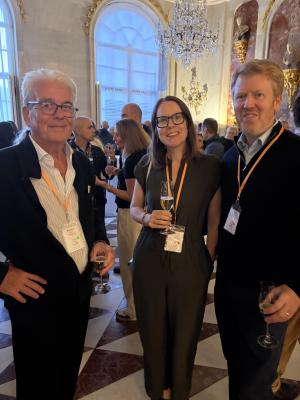
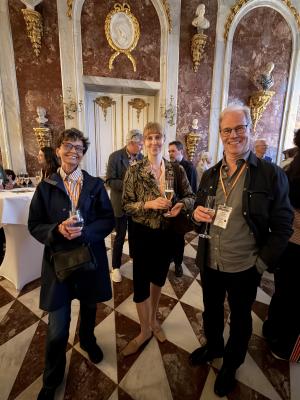
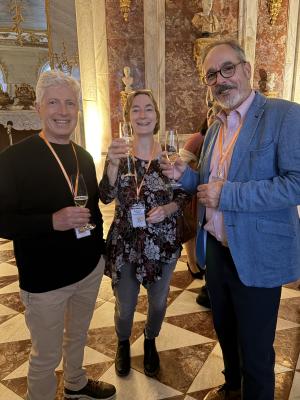
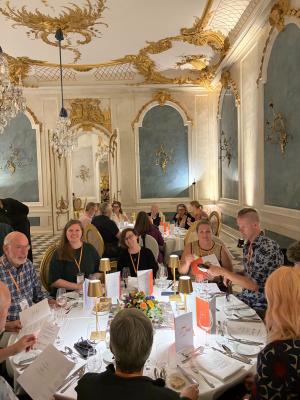
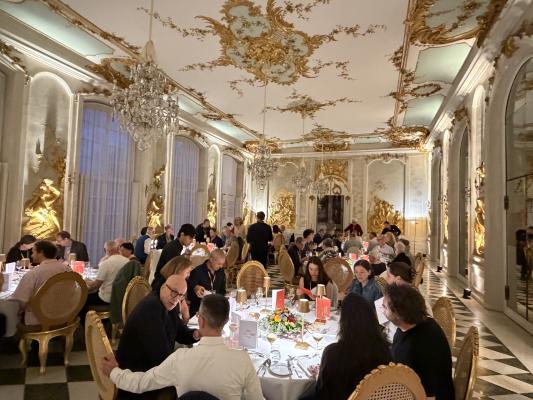
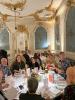
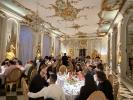
The day concluded with a memorable dinner in the Neue Kammern, or New Chambers, in Sanssouci Park.
Originally built as an orangery, the building was transformed into an elegant guest palace under Frederick the Great in the 1770s. Its richly decorated Rococo interiors provided a magnificent setting for the Congress dinner.
Following an aperitif with a welcome by Dr. Martin Hoernes, Director of the Ernst von Siemens Art Foundation, one of the main sponsors of the evening, delegates gathered in the historic rooms for an evening that brought together the international antiquarian book trade in one of Potsdam's most remarkable royal buildings.
The evening was a truly festive occasion and a wonderful conclusion to a day full of contrasting impressions. Surrounded by the magnificent Rococo interiors of the Neue Kammern, delegates enjoyed an exceptionally elegant setting, excellent hospitality and the pleasure of spending time with colleagues and friends from around the world.
Our particular thanks go to the VDA, the German Antiquarian Booksellers' Association, and especially to Markus Brandis, whose extraordinary commitment made so much of this Congress possible. His efforts in securing sponsorship for such a memorable evening, and the generosity and hospitality extended to international colleagues throughout the Congress, deserve special recognition. It was a wonderful example of the warmth and friendship that make ILAB Congresses so special.