
News & Updates
"A valuable way to contribute to the trade that has given me so much pleasure and joy over the years."
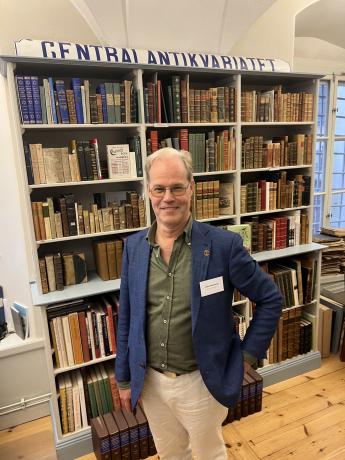
Having served as President of the Swedish Antiquarian Booksellers' Association from 2015 to 2023, he became one of the most regular attendees of ILAB Presidents' Meetings. In this capacity, he gained a deep understanding of the international antiquarian book trade and its challenges.
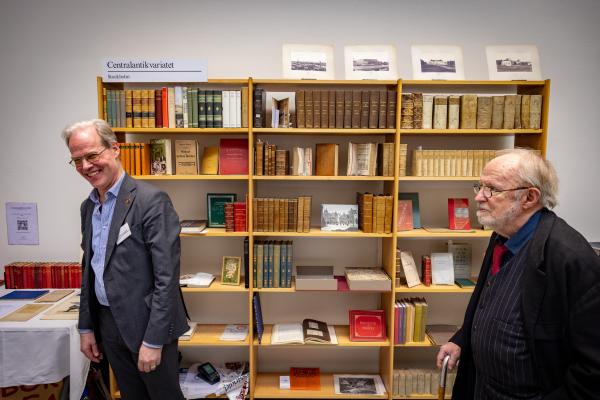
Bookselling runs in the family. His father founded Centralantikvariatet in Stockholm in 1973. After studying history and classical archaeology, Mats joined the family business full time in 1991, taking over its management in 1997.
As he takes on his new role as ILAB President, we spoke to Mats about his background in the antiquarian book trade, his long-standing involvement with the Swedish association and ILAB, and his views on the future of our profession.
Mats, you come from a family of booksellers. Could you tell us a little about your background, the history of Centralantikvariatet and your own areas of specialisation?
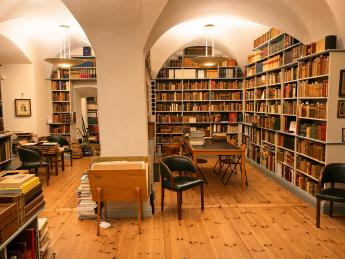
My father started the business as a general second-hand bookshop in 1973, but after moving to larger, more central premises in 1980 and changing the name to Centralantikvariatet, the stock developed. I started working in the shop around 1985, alongside my university studies, and in 1991 I finally decided to become a full-time bookseller. Since then, and especially since I took over the firm in 1997, we have specialized in Scandinavian history and archaeology, offering both old and rare books and modern academic literature. However, as the premises were quite large, we also had a large general stock. Since 2014, when we moved to our current premises in Stockholm's Old Town, a much smaller semi-open shop, we have focused even more on our specialities, as well as expanding our music stock.
You have served the antiquarian book trade in various capacities for many years. What motivates you to take on the demanding role of ILAB President?
During my many years as president of the Swedish association, I realized that I could be quite efficient in improving the association and communicating with the board and members. I also enjoyed it. I was also able to draw more attention to the Swedish association regarding what was happening on the international scene through ILAB. So when I was asked if I would be interested in joining the ILAB committee, it was an easy decision.
Being President of ILAB will certainly be demanding, but it will also be a valuable way to contribute to the trade that has given me so much pleasure and joy over the years. I also believe that my extensive experience has given me valuable insights into how to get things done.
The committee is also great, and it’s a pleasure to work with its members. Of course, there is also our fantastic secretary, who does very impressive work. Together, they made the decision to become president an easy one.
On a personal level, I find the prospect of being the first Swedish ILAB president satisfying.
Having attended many ILAB Presidents' Meetings over the years before becoming a member of the ILAB Committee, how have you seen the challenges facing the international antiquarian book trade change? What concerns you most today?
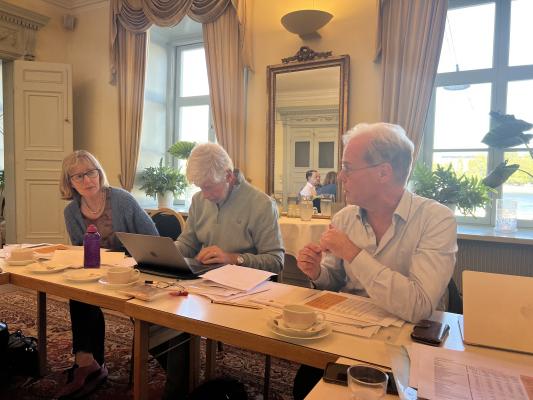
I think the most pressing issues today are the legal challenges that the trade faces from international bodies such as the EU or UNESCO, which have well-meaning cultural protection regulations that are often clumsily executed. There are also more nationalistic and protectionist customs and trade regulations that are emerging.
As an international organisation, ILAB is well placed to deal with these issues, and we are seeing an increasing demand from our members for advice and assistance on these matters.
AI is also emerging as a challenge, although it is too early to say how it will develop.
You have been closely involved in organising the Stockholm fair for many years. How has the fair developed? Can you draw comparisons to peer events in the ILAB fair network?
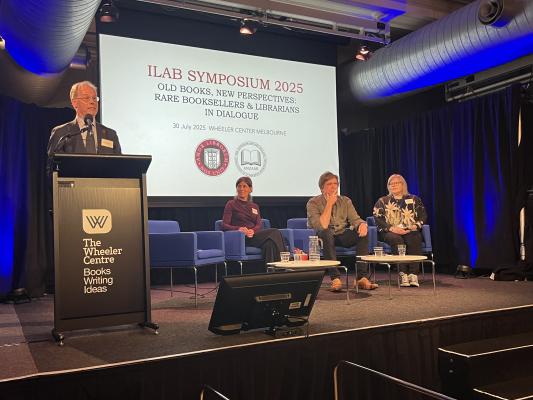
I think there is a general trend towards broadening the scope of fairs by including different kinds of exhibitors and adding exhibitions, lectures, etc. This is certainly something we have also tried to achieve with the Stockholm Book Fair. A couple of years ago, we removed the word 'antiquarian' from the fair's name to appeal to a wider audience.
ILAB celebrates its 80th anniversary in 2027. As its new President, what are your priorities for the coming years, and where would you like to see the organisation develop?
I hope for an even closer cooperation between ILAB and the national associations and their members. For all those engaged in the common cause for the trade, I hope it will feel natural and attractive to work for ILAB too, whether in committees or subcommittees.
As ILAB places increasing emphasis on diversifying the antiquarian book trade, I hope this will also lead to a greater understanding of the importance of international cooperation. To achieve this, however, we need to encourage more people to become actively involved and reach out to new audiences and communities.
We are already taking some exciting steps in this direction. We have just been invited to speak at an international library conference in Mexico in April next year, a region where we have had relatively little involvement in the past. I am also particularly excited that, just a few weeks ago, at our Congress in Berlin, we were able to announce that the next ILAB Congress will take place in Africa for the very first time.
The 2028 ILAB Congress will be held in September in Cape Town and Johannesburg, and we are already working closely with local booksellers on the preparations. We see this as a wonderful opportunity not only to strengthen international connections within the trade, but also to engage with new audiences and communities and broaden ILAB's reach in the years ahead.
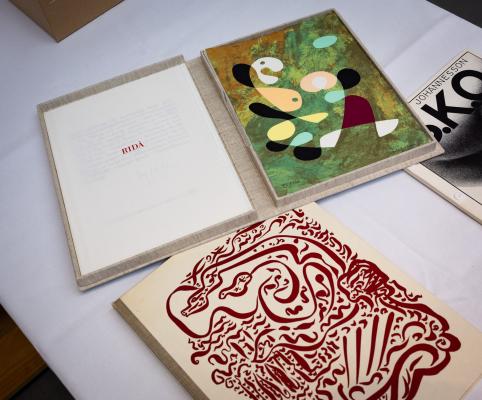

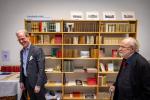
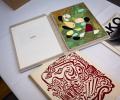
In 2023, you and your Swedish colleagues hosted the ILAB Presidents' Meeting in Stockholm. What makes Stockholm such an interesting city for bibliophiles, and which places would you particularly recommend to visiting book lovers?
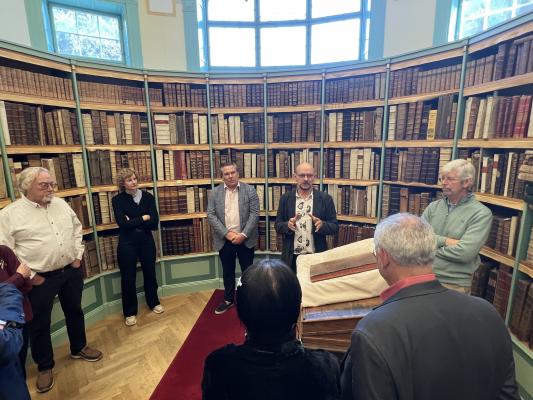
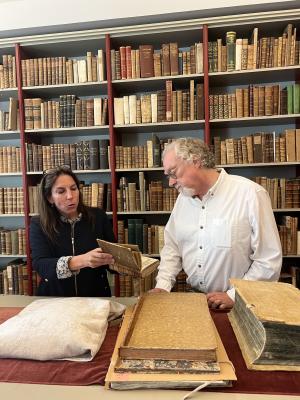
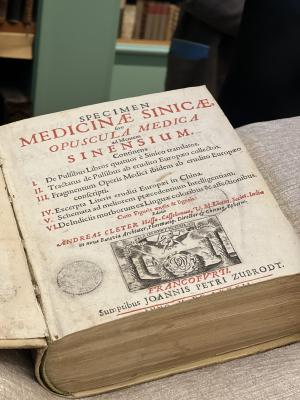
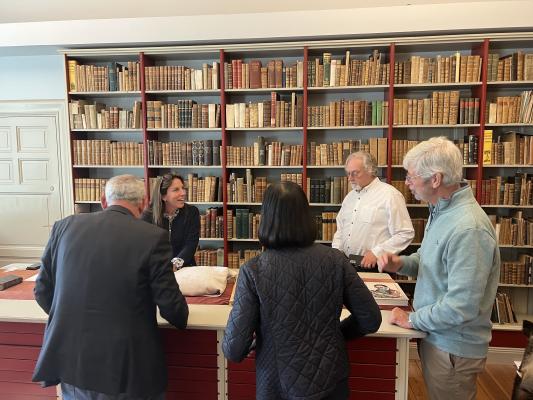
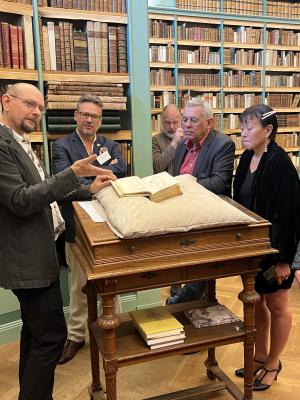
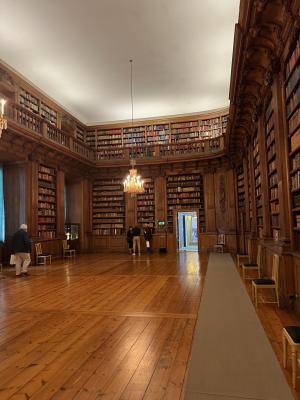
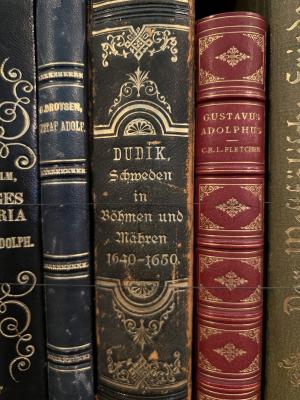
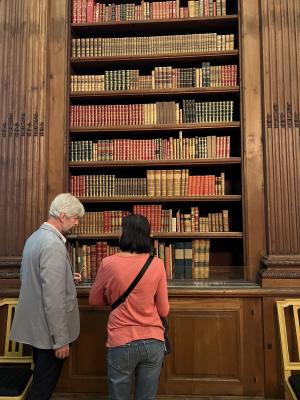
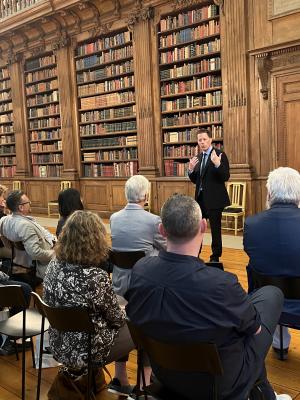
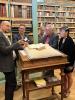
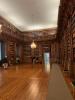
Well, there are of course several nice and interesting antiquarian book stores to visit! But when in Stockholm I would recommend the fine Bernadotte library at the Royal Palace and the Hagströmer library of medical history. Then I would suggest a visit to near by Uppsala and the University library.


Dear Mats, we thank you for this interview.