
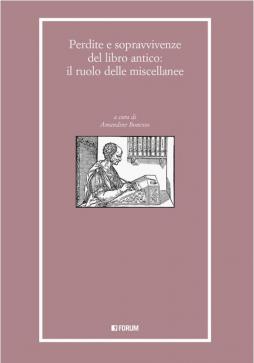
Perdite e sopravvivenze del libro antico: il ruolo delle miscellanee
Amandine Bonesso (ed.)
The miscellaneous book, the assembly of a series of independent units through the process of bookbinding, is a practice that dates back to Late Antiquity and continued through the transition from the manuscript era to the era of printing.
A book typology undervalued by repertoires and bibliographies, by both past and current electronic cataloging systems, the miscellany provides fundamental evidence for understanding the evolution of the forms and methods of producing and preserving the written tradition, as well as of reading practices and the organization of knowledge. Even more significant is its role in the history of the book, as it has allowed a variety of editorial products, from the most substantial to the most fragile and ephemeral, to be preserved from destruction.
The case studies collected in this volume document the extent to which the miscellany has influenced the survival of rare or unknown editions. The contributions, highlighting the unique contents of miscellanies created in Europe between the second half of the 15th century and the first half of the 17th century, describe the creation, use, purposes and history, often characterised by dismemberment and reassembly, of single specimens or collections belonging to public or private libraries and auction houses.