
Actualités
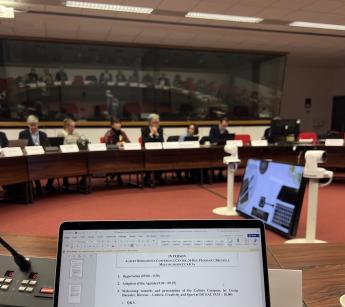
Report from the 4th Meeting for ILAB at the European Commission “Dialogue with the Art Market”
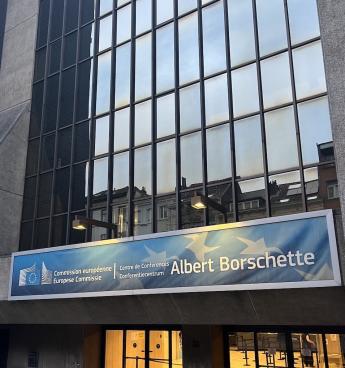
ILAB counts over 700 affiliates across European territory. EU regulations affect the import and export of goods in a trade that is large international. EU actions, therefore, potentially affect all 1600 ILAB booksellers worldwide. By taking part in this expert group and its meetings, ILAB ensures representation of the antiquarian trade and advocates for proportionate, fact-based regulation that protects cultural heritage while enabling the lawful trade in books, manuscripts, and other cultural objects.
EU Culture Compass and policy context
In his opening remarks, Georg Haeusler (Director at the European Commission’s Directorate-General for Education, Youth, Sport and Culture - DG EAC) presented the EU Culture Compass, published and adopted on 12 November 2025, which is intended to provide a strategic framework for EU cultural policy. The document lays out a general approach to the cultural sector without going into any market or arts trade specifics. However, it underlines the EU’s focus and willingness to fund and support the cultural sector.
The full document is available here:
https://culture.ec.europa.eu/sites/default/files/2025-11/Communication%20-%20Culture%20Compass%20with%20cover_0.pdf
Import of cultural goods (ICG system)
The Directorate-General for Taxation and Customs Union (DG TAXUD) reported on the first six months of operation of the electronic Import of Cultural Goods (ICG) system under Regulation (EU) 2019/880. According to the Commission’s data, only a very limited number of import licence applications have been submitted since the system became operational.
It remains unclear whether this reflects a decline in imports of cultural goods into the EU or other factors, such as the administrative burden of the system or lack of awareness. Trade representatives noted that the low uptake raises questions as to whether the regulation is proportionate and whether it effectively achieves its stated objectives.
Supranational Risk Assessment (SNRA) and AML implications
The Directorate-General for Financial Stability, Financial Services and Capital Markets Union (DG FISMA) presented the latest Supranational Risk Assessment (SNRA) on money laundering and terrorist financing, including the section on high-value goods, works of art, and antiques.
A key development noted during the meeting is that the art and antiques market is no longer characterised as a sector of high risk comparable to trafficking in arms or drugs, a classification that had long been considered disproportionate by the trade. The revised risk represents a significant shift in the Commission’s approach and is expected to have an impact on forthcoming legislation.
Following this reassessment, we expect a future increase in Anti-Money Laundering (AML) thresholds for the art and antiques trade. Such an adjustment would be a positive and proportionate development for the sector and reflects many years of advocacy by trade organisations, including CINOA and ILAB.
Studies on the EU art market
Presentations by the European Commission’s Directorate-General for Internal Market, Industry, Entrepreneurship and SMEs (DG GROW), together with KEA European Affairs (a Brussels-based research and consultancy agency) and the Université libre de Bruxelles, examined the scale and structure of the EU art market, including its lower-value segments. These studies contribute to a more nuanced and fact-based understanding of the arts and antiques trade. ILAB and peer organisations have long advocated that legislation affecting the art and antiques trade should be based on data, and we therefore welcome the Commission’s recent efforts to commission research that describes the art market more accurately.
The European Commission’s 2025 Study on the scale and economic dimensions of the EU art market, presented at the meeting, confirms that the European art and antiques trade is diverse and an ecosystem in which dealers, galleries, fairs, and auction houses play a central role in the circulation of artworks and cultural goods. It highlights that the sector is highly segmented and largely composed of small and medium-sized businesses operating across Member States, often with limited resources and dependent on international trade, with high-end activity concentrated in major cultural capitals. It confirms a reality that trade organisations such as CINOA and ILAB have consistently emphasised when advocating for proportionate regulation.
Many of the study’s findings will appear self-evident to those working in the trade on a daily basis. However, it is significant that this evidence now exists at EU level, has undergone institutional validation, and can inform future policy discussions. The commissioning and publication of such research therefore represent an important step forward for the trade and support the continued advocacy efforts of ILAB and its partner organisations.
The full study is available on the European Commission website:
https://culture.ec.europa.eu/document/study-on-the-scale-and-economic-dimensions-of-the-eu-art-market
Further EU-supported projects
Several presentations demonstrated the breadth of EU initiatives supporting the protection of cultural goods, including:
- A presentation by UNESCO (United Nations Educational, Scientific and Cultural Organization, the UN institution responsible for culture, heritage, education, and science), presenting its "Database of National Cultural Heritage Law", the UNESCO "Virtual Museum of Stolen Cultural Objects", and feedback from recent conferences on fighting illicit trafficking of cultural heritage
- A presentation on research and funding of cultural projects under the “Horizon Europe” programme, run by the European Commission’s Directorate-General for Research and Innovation (DG RTD), more information can be found here: https://research-and-innovation.ec.europa.eu/funding/funding-opportunities/funding-programmes-and-open-calls/horizon-europe_en
- A presentation of EU-funded projects on technology and artificial intelligence for heritage protection
More detailed information on the presentations above can be provided on request.
The meeting had a very full agenda and ran over time, with some topics postponed to an online meeting in the coming weeks.
ILAB highly appreciates the time and effort the Directorate-General for Education, Youth, Sport and Culture (DG EAC) has invested over the past two years in running this expert group, exposing representatives of the trade to ongoing EU projects and pending legislation, and listening to the trade’s feedback. All sides agreed that better mutual understanding has been achieved, and it was also agreed that the group, initially established for three years (ending in 2026), should be continued.
While some of these issues, particularly when discussed at EU level, may seem far removed from the everyday work of dealers, they do matter once regulations come into effect. They matter even more and cause greater frustration when regulations are disconnected from the realities of the trade and disproportionate in their impact. ILAB will continue its advocacy efforts in Brussels.
Report and images by Angelika Elstner
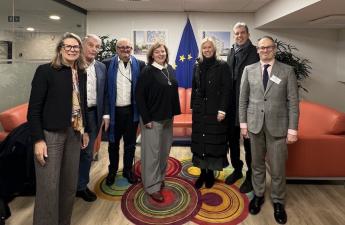
Image 4 shows some members of the expert group (not the full group). From left to right: Erika Bochereau (Secretary General, CINOA), Vincent Gerling (President, International Ancient Art Dealers Association), Eduard Gamler (Consultant and Solicitor, Dorotheum Auctions, Vienna), Petra Young (Vice President, CINOA), Angelika Elstner (Executive Secretary, ILAB), Erik Edelstam (Swedish Antique Dealers Association; Treasurer, CINOA), and Mark Dodgson (Vice President, CINOA; Executive Secretary, British Antique Dealers Association).